What actually makes people trust a business online?
Trust online is not created by one badge, one testimonial or a polished homepage. Customers collect small pieces of evidence until they feel comfortable taking the next step.
People rarely arrive on a website thinking:
I am now going to assess the credibility of this company.
They just do it.
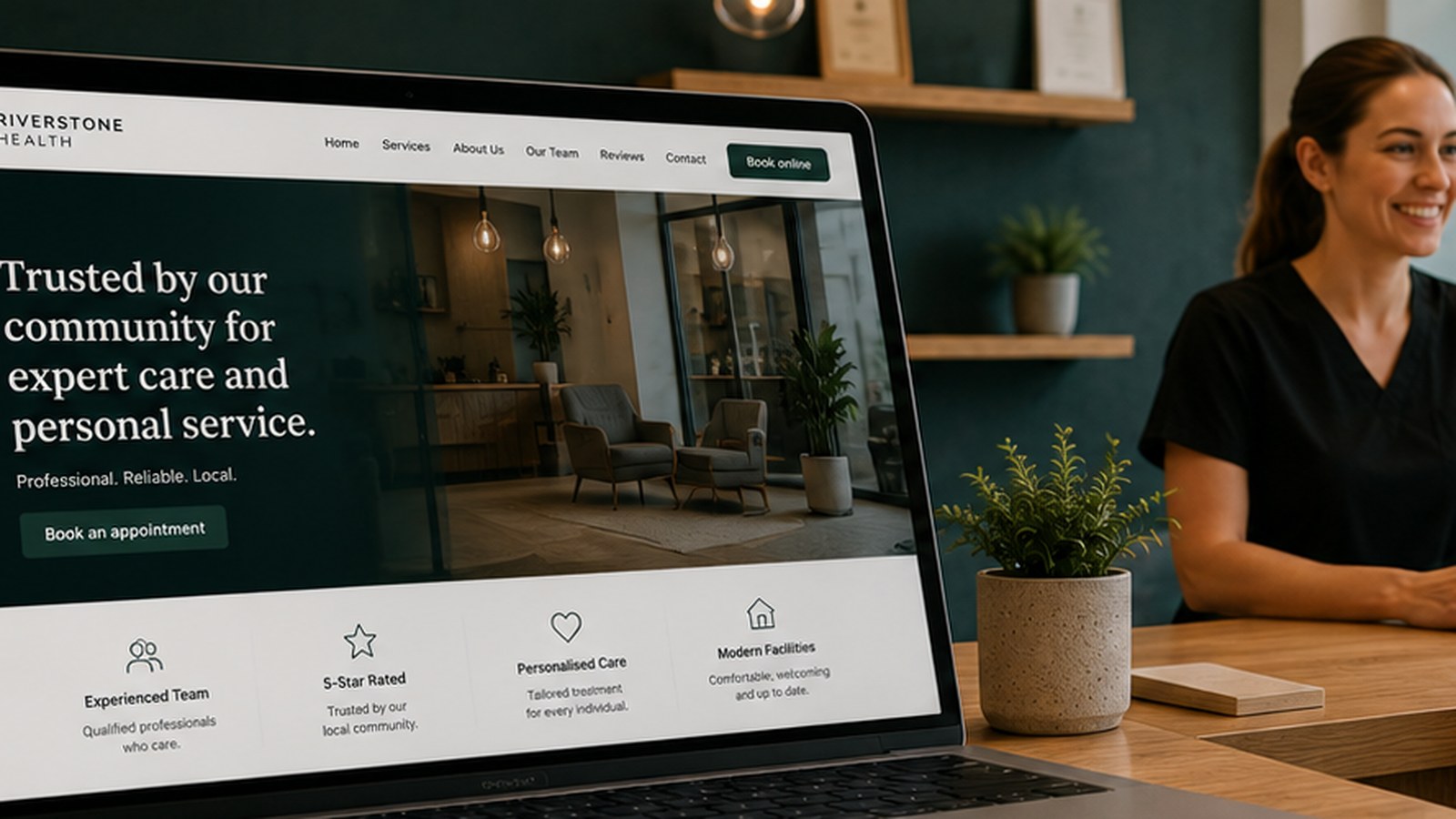
The photography looks genuine or it doesn't. The reviews reassure them or raise questions. The website feels current or abandoned. The pricing makes sense or feels deliberately vague. The contact information is easy to find or strangely absent. The claims sound credible or slightly too good to be true.
Each one is a small signal.
Together, those signals answer a much bigger question:
Do I feel comfortable doing business with these people?
And that decision now happens across far more than your website.
of consumers read online reviews for local businesses.
BrightLocal, Local Consumer Review Survey 2026
said positive reviews made them more likely to use a business.
BrightLocal, Local Consumer Review Survey 2026
visit the business's website after reading positive reviews.
BrightLocal, Local Consumer Review Survey 2026
Reviews → Confidence → Website
Trust starts before someone reaches your website
Your website used to be the obvious centre of your online presence.
It is still enormously important, but it is no longer where every customer forms their first opinion.
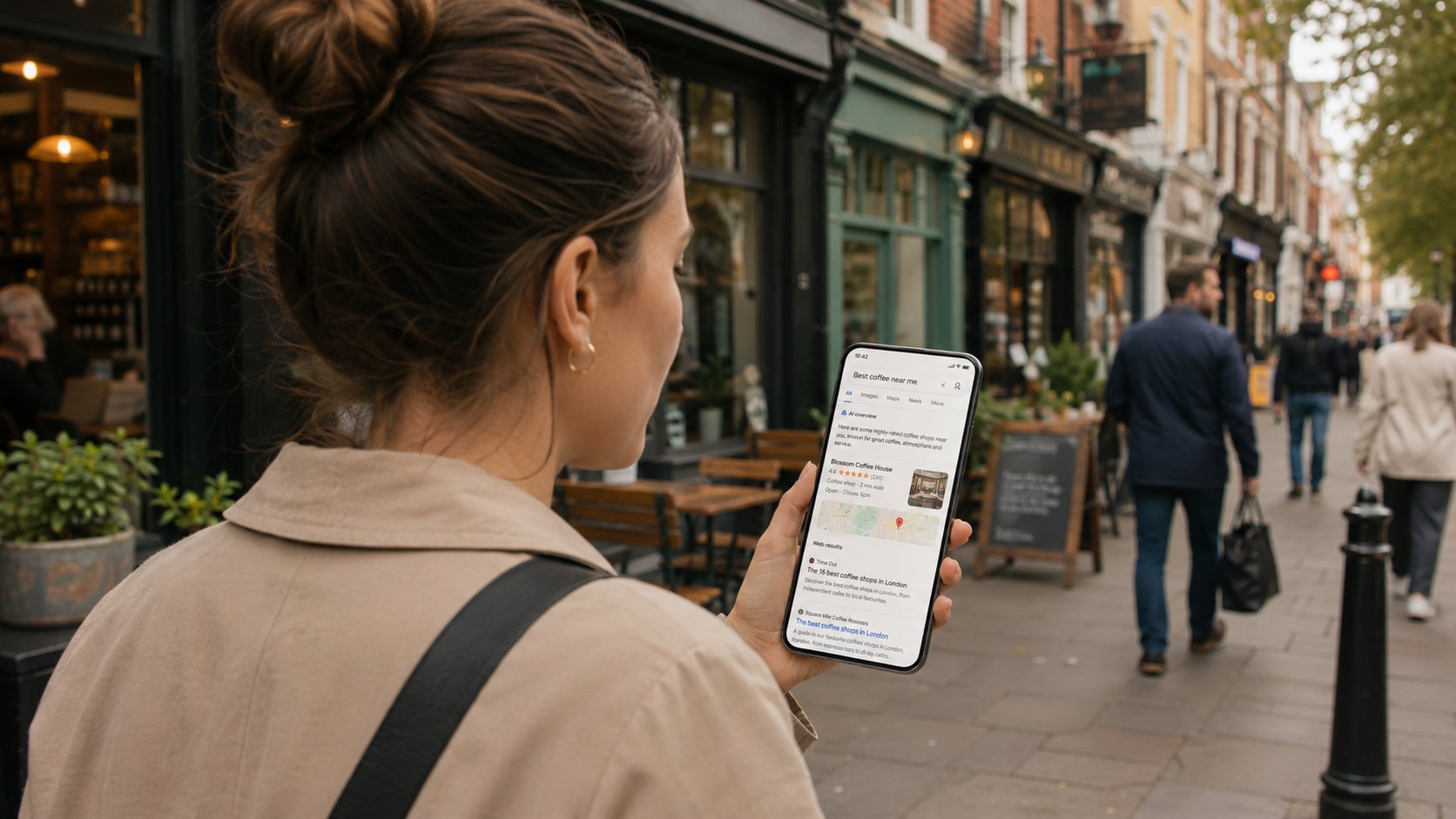
They might first see:
- a Google Business Profile
- a customer review
- an Instagram post
- a Reddit discussion
- an AI recommendation
- a YouTube video
- a marketplace listing
- an article mentioning your business
By the time they eventually reach your website, they may already have an impression of you.
The website then has another job: confirm it.
BrightLocal found that 54% of consumers went to the business's website after reading positive reviews.
That is important.
A good review has not necessarily won the customer. It has earned the business another inspection.
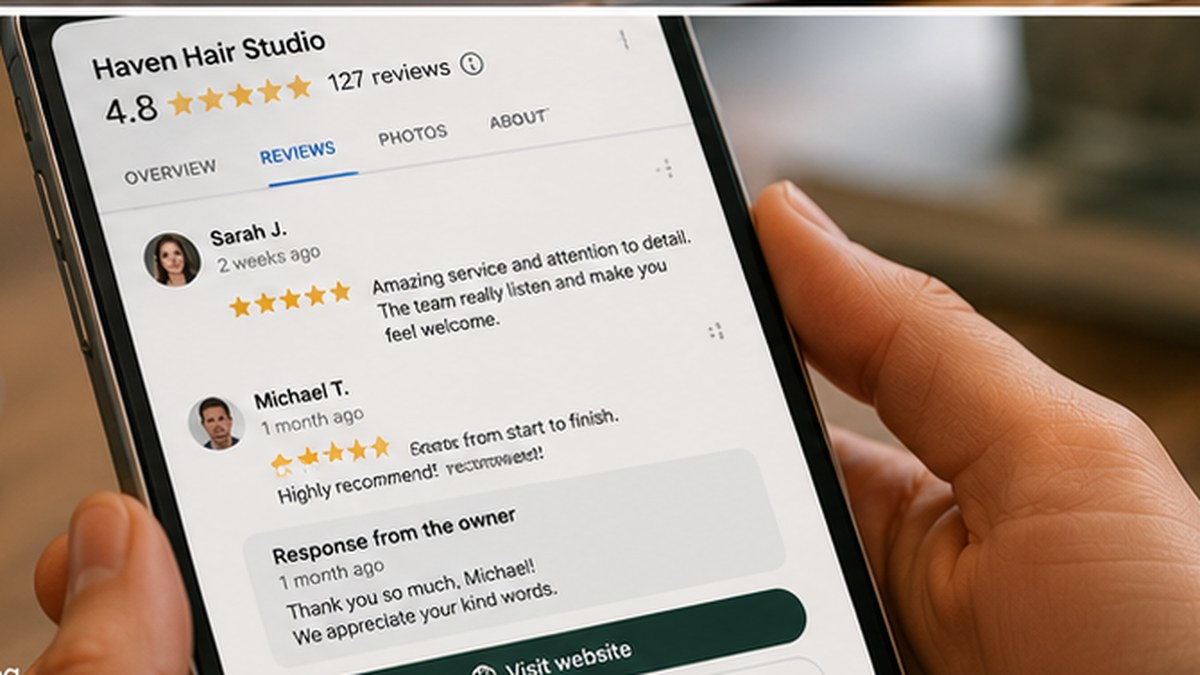
Reviews are evidence, not decoration
Adding three glowing testimonials to the homepage does not create instant trust.
People have become far more sophisticated about online reviews.
They look at quantity, quality, recency and consistency.
BrightLocal's 2026 research found that 47% of respondents would not use a business with fewer than 20 reviews, while 74% were interested in reviews written within the previous three months.
The most important factor was not even star rating. It was seeing similar sentiment repeated across different reviews.
Consumers who said the factor mattered. Source: BrightLocal, Local Consumer Review Survey 2026.
People are looking for a pattern, not one perfect review.
This is good news for genuine businesses.
You do not need every review to be perfect. You need enough real customers saying broadly consistent things that the pattern becomes believable.
Your website then has to back the story up
This is where businesses often separate reputation management from website management when customers do no such thing.
Imagine somebody finds strong reviews praising professional service, beautiful social content and an active business profile.
Then they visit the website. It is slow. The last news item is four years old. Half the photographs are broken. The team members do not match the people mentioned elsewhere. The contact form looks questionable.
The customer now has conflicting evidence.
Trust is not built through individual channels. It is built through consistency between them.
Your Google profile, website, reviews, social channels, emails and real-world service do not have to look identical. But they should clearly describe the same business.
Looking professional matters, but perfection doesn't
Good design matters because it removes reasons to doubt you.
That does not mean every business needs an expensive cinematic website.
In fact, excessively polished design can occasionally work against a small local business if it feels disconnected from the company customers actually encounter.
The more important qualities are clarity and intentionality.
- Does the website look maintained?
- Can I tell what this company actually does?
- Is the important information easy to find?
- Can I see who is behind the business?
- Does the language sound believable?
- Do the images look genuine?
- Does everything work properly?
A modest website that answers those questions well can create far more confidence than a beautiful one that does not.
Transparency is becoming part of trust
Trust is also affected by what a business chooses to explain.
Pricing is one obvious example.
Not every company can publish a fixed price. Complex services genuinely need quoting.
But there is a difference between:
Every project is different. Contact us.
and:
Projects vary according to X, Y and Z. Here is how we price them and what happens after you enquire.
The second removes uncertainty even without giving a number.
The same applies to delivery times, cancellation policies, guarantees, data collection, returns and what happens after somebody fills in a form.
Privacy increasingly belongs in that conversation too.
PwC's 2025 Customer Experience Survey found that 53% of consumers thought sharing personal data could be worthwhile when it made their experience smoother, but 93% said mishandling their information would cause a brand to lose their trust.
Trust includes telling people what you are going to do, then behaving accordingly.
Details matter more when the decision costs more
Trust requirements change with risk.
You will probably tolerate a slightly questionable website when buying a £12 novelty mug. You will be far less forgiving when choosing an accountant, surgeon, solar installer or company to host your wedding.
As the value, personal importance or risk of the decision increases, customers look for more evidence.
That could mean:
- qualifications
- accreditations
- detailed reviews
- examples of previous work
- transparent processes
- recognised payment methods
- guarantees
- professional contact information
- useful company information
- clear privacy and security practices
The answer is not to cover the website in badges.
It is to understand what somebody needs to believe before they can comfortably take the next step.
Trust is really the removal of doubt
Businesses often think trust needs a special "trust section".
It doesn't.
Trust should run through the entire experience.
- Good reviews reduce doubt.
- Clear writing reduces doubt.
- Real photographs reduce doubt.
- Transparent policies reduce doubt.
- Good design reduces doubt.
- A fast website reduces doubt.
- Clear contact details reduce doubt.
- Doing what you promised reduces doubt.
There is no magic badge that can achieve the same thing.
The strongest businesses online simply give people fewer and fewer reasons to hesitate.
Does your website give customers enough reason to choose you?
We help strengthen the website experience and the evidence that turns interest into enquiries.
Let's talkFrequently asked questions
Do online reviews really affect trust?
Yes. BrightLocal's 2026 US research found that 85% of respondents were more likely to use a business after reading positive reviews.
How many reviews does a business need?
There is no universal number, but BrightLocal found that 47% of its 2026 respondents would not use a business with fewer than 20. Recency and consistency also mattered.
Does professional website design create trust?
It helps, but design alone is not enough. Customers also look for consistency, clear information, working functionality, current content, genuine reviews and evidence that the business is what it claims to be.
Should businesses publish their prices online?
Where possible, yes. Where fixed pricing is unrealistic, explaining what affects price and what happens next can still remove uncertainty.
Does your website give customers enough reason to choose you?
We help businesses strengthen the website experience, customer journey and evidence that turns interest into enquiries, bookings and sales.
Let's talk